


When it comes to protecting your property from intruders, razor wire security stands as one of the most effective deterrents available. This high-security fencing solution, also known as concertina wire or barbed tape, has become the preferred choice for commercial facilities, military installations, and high-risk areas worldwide. In this comprehensive guide, we’ll explore everything about razor wire security, from types and installation to costs and legal considerations.
What is Razor Wire Security?
Razor wire security refers to a modern perimeter protection system featuring sharp-edged blades mounted on high-tensile steel wire. Unlike traditional barbed wire, razor wire consists of a steel tape punched with razor-sharp barbs that are cold-crimped onto a central high-tensile core wire. This creates a formidable physical and psychological barrier against unauthorized entry.
The security wire features flat, blade-like barbs spaced at close intervals (typically 13-34mm apart) that can snag clothing and deter climbing attempts. These sharp blades make razor wire significantly more effective than conventional barbed wire fence options, providing superior perimeter security for properties requiring maximum protection.
Razor Wire vs Barbed Wire: Understanding the Difference
Many people wonder about the difference between razor wire and barbed wire. While both serve as security fencing materials, razor wire offers significantly enhanced protection:
Razor Wire Features:
- Sharp, flat steel blades that can cut through clothing
- Closely spaced barbs (13-34mm intervals)
- High-tensile core wire (2.5-3mm diameter)
- Extremely difficult to cut with hand tools
- Superior deterrent effect
- Cost: $0.50 to $2.00 per linear foot
Barbed Wire Features:
- Twisted wire with pointed barbs
- Wider spacing between barbs (4-5 inches)
- Simple twisted wire construction
- Easier to cut or defeat
- Primarily for livestock containment
- Cost: $0.04 to $0.15 per linear foot
Razor wire security provides much better protection due to its formidable sharp blades and closer spacing, making it the preferred choice for high-security applications rather than agricultural use.
Types of Razor Wire for Security Applications
Understanding different razor wire types helps you select the right security solution for your needs.
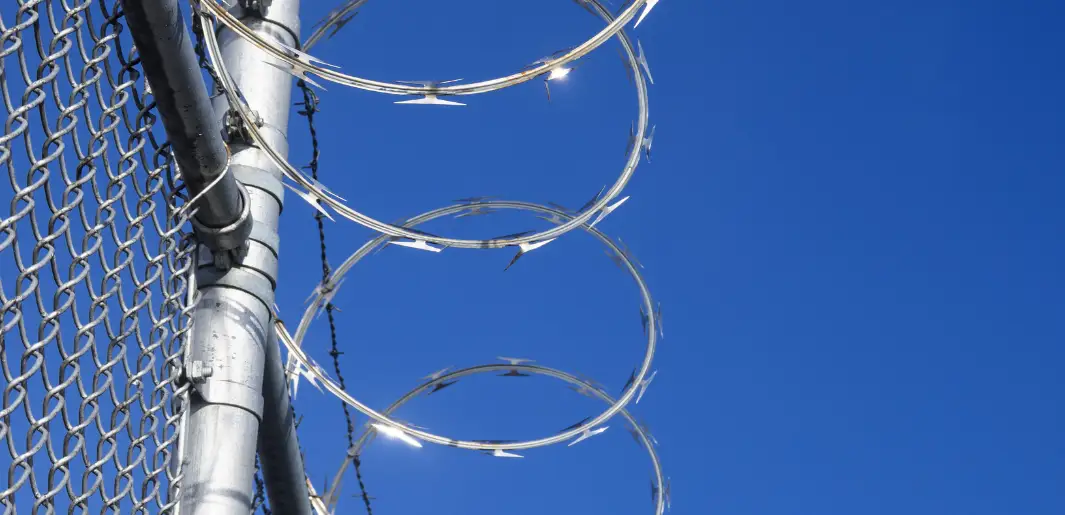
Concertina Razor Wire
Concertina razor wire is the most popular type, formed into expandable coils resembling a musical concertina. Available in diameters from 450mm to 960mm, these galvanized steel coils can be quickly deployed and expanded up to 10-15 meters. Single coil concertina features one continuous spiral, while crossed concertina wire (also called double concertina) has two spirals bound together with clips for extra strength.
Concertina wire installation is relatively simple – coils stretch along fence lines or walls, creating multiple layers of protection. This makes it ideal for temporary security barriers, military applications, and rapid deployment scenarios.
Flat Wrap Razor Wire
Flat wrap razor wire, also known as razor ribbon, consists of razor tape wrapped around a supporting cable or directly attached to fence posts. With 18-41 loops per coil, it’s installed along the top of existing chain link fences, welded mesh fencing, or walls without requiring major structural changes. This type provides excellent security enhancement for existing perimeter fencing.
Welded Razor Mesh (Razor Wire Fence Panels)
Welded razor mesh combines traditional wire mesh fencing with integrated razor wire elements. These pre-fabricated panels create a complete security barrier that’s virtually impossible to climb or cut through. The mesh provides structural integrity while razor blades offer maximum deterrence, making it ideal for prison fencing and high-security installations.
BTO and CBT Razor Wire Specifications
Razor wire comes in standardized specifications:
- BTO-22: Barb length 22mm, common for commercial security
- BTO-18: Barb length 18mm, lighter duty applications
- CBT-60: Cross type, 60 barbs per coil
- CBT-65: Cross type, 65 barbs per coil, maximum security
Key Benefits of Razor Wire Security Systems
Implementing razor wire security offers numerous advantages for property protection.
Superior Deterrent and Psychological Effect
The intimidating appearance of razor wire creates an immediate psychological barrier. Sharp razor blades visible along your perimeter send a clear message to potential intruders: this property is seriously protected. Studies show that visible security measures like razor wire can reduce intrusion attempts by up to 70%, as criminals typically choose easier targets.
Cost-Effective Long-Term Protection
Compared to electronic security systems requiring constant power, monitoring, and maintenance, razor wire provides 24/7 protection at a fraction of the ongoing cost. While concertina razor wire costs $0.65 to $2.20 per linear foot installed, it requires minimal maintenance once in place. Over its 15-25 year lifespan, this represents excellent value for perimeter security.
Low Maintenance Requirements
Modern razor wire security installations use galvanized steel or stainless steel (SS304, SS316) with zinc coating of 550 gm/m² minimum. This provides excellent corrosion resistance even in harsh environments. Hot-dip galvanized razor wire withstands coastal conditions, industrial areas, and extreme weather with minimal maintenance, requiring only quarterly inspections.
Versatile Installation Options
Razor wire fencing adapts to virtually any security challenge. Install it on:
- Chain link fence tops
- Concrete or brick walls using barb arms
- Welded wire mesh fencing
- Y-posts or V-bracket supports
- Palisade fencing systems
- Ground-level perimeter barriers
This versatility makes razor wire suitable for everything from residential security to military installations.
Enhanced Property Value and Insurance Benefits
Commercial and industrial properties with robust security measures like razor wire often see reduced insurance premiums. Insurers recognize that effective perimeter protection significantly reduces theft risk. Many property owners report insurance savings of 10-20% after installing professional razor wire security systems.
Where Razor Wire Security is Most Effective
Razor wire fencing finds applications across numerous high-security settings.
Commercial and Industrial Facilities
Warehouses, distribution centers, and manufacturing plants rely on razor wire security to protect valuable inventory and equipment. Installing concertina razor wire on top of chain link fencing creates a formidable barrier that deters theft during off-hours when facilities are most vulnerable.
Correctional Facilities and Prisons
Prison fencing systems use multiple rows of crossed concertina razor wire, often in pyramid formations with base coil diameter 730mm and top diameter 980mm. The triple-coil pyramid configuration makes escape virtually impossible without specialized cutting tools and extended time.
Military Installations and Border Security
Military bases deploy razor wire barriers as both perimeter protection and internal zone separation. The quick-deploy nature of concertina wire allows rapid security establishment. Galvanized razor wire coils can be transported and installed quickly for temporary or permanent military site security.
Critical Infrastructure Protection
Power stations, water treatment plants, telecommunications facilities, and airports use welded razor mesh and concertina wire fencing to protect critical infrastructure from vandalism, sabotage, and unauthorized access.
High-Security Residential Areas
In regions with elevated crime rates, residential properties and gated communities incorporate razor wire security. Installing razor wire on walls using Y-posts or barb arms provides effective protection while maintaining property aesthetics when properly designed.
Agricultural and Rural Properties
Large farms, ranches, and rural estates use razor wire to protect livestock, expensive equipment, and extensive perimeters that would be costly to secure through other means. The cost-effective nature of razor wire makes it ideal for securing large acreage.
Razor Wire Installation: Professional Guide
Proper installation maximizes the effectiveness of your razor wire security system.
Planning Your Security Perimeter
Conduct a thorough security assessment identifying vulnerable entry points, sight lines, and coverage requirements. Local building codes may regulate razor wire height, placement, and signage requirements. Research applicable laws before proceeding, as some residential zones prohibit razor wire installation near public sidewalks.
Essential Tools and Materials
Professional razor wire installation requires:
- Heavy-duty leather gloves (critical safety equipment)
- Wire cutters and tensioning tools
- Y-posts, V-brackets, or barb arms with flanges
- Tension line wire (3.5mm diameter minimum)
- Anchor rods (8mm diameter, 250mm long)
- Hog rings or clips for securing
- Safety glasses and protective clothing
Concertina Razor Wire Installation Process
Step 1: Post Installation Install fence posts or Y-posts at appropriate intervals. For concertina wire, posts should be spaced 5-10 meters apart depending on coil diameter and terrain.
Step 2: Tension Wire Setup
String tension line wire (galvanized high tensile, 3.5mm minimum) between posts. This provides structural support for the concertina coils.
Step 3: Coil Deployment Place concertina wire coils on their side, remove wire ties, and carefully expand. Standard deployment: 450mm diameter coils expand to 10 meters maximum with 18cm spacing between coil openings; 960mm coils expand to 10-15 meters with proper support.
Step 4: Securing Attach expanded coils to tension wire using stirrup wire or clips at two points per coil. Connect adjacent coils with steel wire (2mm diameter) at two diametrically opposite points.
Step 5: Ground Anchoring For ground-level installations, use anchor rods every 5 meters minimum to secure lower concertina tapes to the ground.
Flat Wrap Razor Wire Installation
Mount brackets at regular intervals along your existing fence or wall top. Thread razor ribbon through brackets, maintaining consistent tension. Secure ends firmly and ensure no sagging occurs. Proper tension ensures the razor wire remains effective and presents a formidable barrier.
Safety Considerations During Installation
Razor wire installation poses significant injury risks. Always:
- Wear thick leather gloves and long-sleeve protective clothing
- Use safety glasses to protect from wire snap-back
- Work with a partner when handling large coils
- Never rush – razor blades can cause severe cuts
- Consider professional installation for large projects
Professional installers have experience handling dangerous materials safely and can complete installations more efficiently while minimizing injury risk.
Legal Considerations for Razor Wire Security
Understanding legal requirements prevents costly mistakes and liability issues.
Local Regulations and Building Codes
Many jurisdictions regulate security fencing height, placement, and type. Some areas prohibit razor wire security:
- On residential properties adjacent to public sidewalks
- In certain residential zoning districts
- Below specific heights (forcing rooftop-only installation)
- Without proper permits
Contact your local planning department and homeowners association before installation. Commercial properties typically face fewer restrictions, but permits may still be required.
Liability and Warning Signage
Property owners using razor wire may face liability if someone is injured. Minimize risk by:
- Installing proper warning signs (“Danger: Razor Wire,” “High Security Area”)
- Ensuring adequate lighting around razor wire
- Documenting legitimate security needs
- Maintaining installation in good repair
- Consulting with legal counsel about liability coverage
Warning signs must be visible and placed at regular intervals along the perimeter. This demonstrates you’ve taken reasonable precautions to prevent accidental injury.
Prohibited Uses and Restrictions
Some jurisdictions specifically prohibit:
- Razor wire in residential areas
- Installation at heights accessible to children
- Use near public parks or playgrounds
- Placement that could harm domesticated animals
Norway, for example, prohibits barbed and razor wire except in combination with other fencing to protect animals. Always verify local restrictions before purchasing materials.
Razor Wire Cost: Complete Pricing Guide
Understanding razor wire costs helps budget your security project effectively.
Material Costs
Razor wire pricing varies by type and quality:
Concertina Razor Wire:
- Single coil (450mm): $0.65-$1.00 per linear foot
- Crossed coil (960mm): $1.20-$2.20 per linear foot
- Per roll: $100-$500 depending on diameter and specifications
Flat Wrap Razor Wire:
- $0.50-$1.50 per linear foot
- 18-41 loop coils: $80-$200 per roll
Welded Razor Mesh Panels:
- $15-$35 per linear foot installed
- Pre-fabricated panels with integrated blades
Quality Factors Affecting Price:
- Galvanized vs. stainless steel (SS304, SS316 costs 2-3x more)
- Blade thickness (0.5-1.5mm)
- Core wire diameter (2.5-3mm)
- Zinc coating thickness (250-550 gm/m²)
Installation Costs
Professional installation adds $40-$110 per hour for labor, typically translating to:
- Residential installations: $3-$8 per linear foot total
- Commercial high-security: $10-$20 per linear foot total
- Add-on to existing fence: $0.65-$3.25 per linear foot
DIY installation saves money but requires proper safety equipment, skills, and insurance considerations. Professional installers complete work faster and safely.
Per-Acre Pricing
For large properties:
- Razor wire fencing: $836-$2,200 per acre
- Standard livestock barbed wire: $2,000-$2,200 per acre
Bulk purchasing and contractor discounts apply to large acreage installations.
Long-Term Value Analysis
Over a 15-25 year lifespan, razor wire represents one of the most cost-effective security investments:
- No electrical costs (unlike electric fencing)
- No monitoring fees (unlike alarm systems)
- Minimal maintenance costs
- Potential insurance premium reductions of 10-20%
- One-time installation investment
When calculated annually, professional razor wire security costs just $0.20-$1.20 per linear foot per year – far less than electronic security alternatives.
Comparing Security Fencing Options
How does razor wire security compare to alternatives?
Razor Wire vs Barbed Wire Detailed Comparison
Security Effectiveness: Razor wire provides superior protection due to closely spaced sharp blades versus barbed wire’s widely spaced points. Crossing razor wire is virtually impossible without tools; barbed wire mainly slows intruders.
Cost Comparison:
- Barbed wire: $0.04-$0.15 per linear foot (material only)
- Razor wire: $0.50-$2.20 per linear foot (material only)
While barbed wire costs less, razor wire delivers 5-10 times better security, making it cost-effective for high-security needs.
Applications:
- Barbed wire: Livestock containment, agricultural boundaries, low-security perimeters
- Razor wire: Military installations, prisons, commercial security, critical infrastructure
Maintenance: Both galvanized options resist corrosion well, but razor wire’s robust construction withstands cutting attempts better.
Razor Wire vs Electric Fencing
Electric fencing requires constant power, regular maintenance, and monitoring. Power outages disable electric fences completely. Razor wire operates passively 24/7 without electricity, making it more reliable for perimeter security. However, electric fencing better suits agricultural applications where animal containment without injury is the goal.
Razor Wire vs Security Cameras
These systems serve complementary roles. Cameras detect and record; razor wire physically prevents intrusion. The most effective security strategies integrate both: cameras identify threats while razor wire stops them. Installing concertina razor wire on chain link fencing combined with surveillance creates layered defense.
Integrated Security Solutions
Modern security approaches combine:
- Razor wire security for physical barriers
- Motion sensors and alarms for detection
- CCTV surveillance for monitoring
- Lighting systems for visibility
- Access control systems for entry points
This layered defense ensures if one system is compromised, others remain operational.
Maintenance and Longevity of Razor Wire Security
Proper maintenance extends razor wire lifespan and effectiveness.
Quarterly Inspection Schedule
Conduct inspections every 3 months checking for:
- Corrosion or rust spots (especially non-galvanized areas)
- Loose mounting brackets or posts
- Sagging tension wire
- Cut or damaged razor blades
- Attempts to compromise the barrier
- Vegetation growth interfering with coils
Early detection prevents security gaps from developing and allows prompt repairs.
Cleaning and Corrosion Prevention
In coastal or industrial environments with salt air or chemical exposure:
- Clean razor wire annually with water
- Apply corrosion inhibitor to exposed cut ends
- Check galvanized coating integrity
- Replace severely corroded sections promptly
Quality hot-dip galvanized razor wire with 550 gm/m² zinc coating resists corrosion for 15-25 years even in harsh conditions.
Repair and Replacement
Damaged razor wire sections should be replaced immediately to maintain security integrity. Keep spare coils and mounting hardware for quick repairs. Professional-grade galvanized concertina wire from reputable manufacturers lasts significantly longer than cheaper alternatives.
Expected Lifespan
- Hot-dip galvanized razor wire: 15-25 years
- Stainless steel razor wire (SS304/SS316): 25-40 years
- PVC coated options: 10-15 years (coating degrades faster)
- Lower-quality imports: 5-10 years
Investing in quality materials provides better long-term value than replacing cheap razor wire every few years.
Common Myths About Razor Wire Security
Let’s address misconceptions about razor wire systems.
Myth: Razor Wire is Only for Prisons
While correctional facilities extensively use razor wire security, it’s equally appropriate for commercial properties, industrial sites, military installations, and high-security residential applications. Welded razor mesh and concertina wire protect warehouses, equipment yards, and critical infrastructure worldwide.
Myth: Razor Wire Always Causes Serious Injury
Modern razor wire is designed primarily as a deterrent. The blade design typically causes snags and minor cuts rather than severe lacerations when encountered at normal speeds. However, the threat of injury creates powerful psychological deterrence. Proper warning signage and installation height minimize accidental contact risk.
Myth: Razor Wire Makes Properties Look Like Prisons
When professionally installed with appropriate fencing and landscaping, razor wire provides security without creating an institutional appearance. Strategic placement (rooftop installation, rear boundaries), attractive base fencing (wrought iron, architectural mesh), and complementary landscaping balance security with aesthetics.
Myth: DIY Razor Wire Installation is Easy
While technically possible, razor wire installation poses significant safety risks. Professional installers have proper safety equipment, installation experience, and insurance coverage. DIY mistakes can result in:
- Personal injury from sharp blades
- Improper tension causing system failure
- Code violations and fines
- Inadequate coverage leaving security gaps
- Liability exposure
Professional installation typically costs $40-$110 per hour but ensures proper, safe installation.
Choosing Quality Razor Wire Security Providers
Selecting the right supplier and installer ensures system effectiveness.
Manufacturer Quality Standards
Look for razor wire meeting industry specifications:
- ASTM standards for steel wire
- Minimum 550 gm/m² zinc coating for galvanized options
- Proper blade thickness (0.5-1.5mm)
- High-tensile core wire (2.5-3mm diameter)
- USA or European manufacturing (avoid low-quality imports)
Quality manufacturers provide detailed specifications including barb length, spacing, wire diameter, and coating thickness.
Installer Credentials and Experience
Choose professional installers with:
- Demonstrated experience in razor wire installation
- Proper licensing and insurance coverage
- References from similar projects
- Knowledge of local building codes
- Safety training and equipment
Request examples of completed installations and verify references before committing.
Warranty Coverage
Reputable suppliers and installers provide comprehensive warranties:
- Material warranties: 10-25 years depending on coating
- Installation workmanship: 1-5 years
- Corrosion coverage for galvanized products
Understand warranty terms, what’s covered, exclusions, and claim procedures before purchasing.
Red Flags to Avoid
Warning signs of poor-quality providers:
- Significantly lower prices than competitors (cheap materials)
- No verifiable references or portfolio
- Lack of proper licensing or insurance
- Unwillingness to provide specifications
- Pressure tactics or rushed decisions
- No written contracts or warranties
Quality razor wire security is an investment in property protection. Don’t compromise on critical security infrastructure to save a few dollars.
Installation Best Practices for Maximum Security
Professional techniques ensure optimal razor wire effectiveness.
Proper Height Selection
- Minimum 6-7 feet total fence height for perimeter security
- Razor wire topping adds 1-3 feet additional height
- Commercial facilities: 8-12 feet total height recommended
- Maximum security: 12-15 feet with multiple concertina layers
Higher installations increase climbing difficulty and deterrence value.
Optimal Coil Spacing
Concertina wire spacing affects security level:
- Maximum security: 6-10 meters between coils
- Standard security: 10-15 meters between coils
- Single coil spacing: Every 25cm along fence line
- Ground barriers: 5 meters between anchor points
Closer spacing provides better coverage but increases material costs.
Multi-Layer Configurations
Maximum security installations use layered approaches:
- Triple coil pyramid: Base coils 730mm, top coil 980mm
- Stacked rows: 2-5 horizontal rows of concertina
- Combined systems: Welded mesh base with razor wire topping
- Perimeter + wall: Ground-level barrier plus wall-top installation
Layered systems force intruders to defeat multiple barriers, dramatically increasing intrusion time and detection likelihood.
Integration with Existing Fencing
Razor wire enhances existing security fencing:
- Chain link fence: Install flat wrap or concertina on top rail
- Welded mesh: Use Y-posts to support concertina coils
- Palisade fencing: V-brackets hold razor ribbon
- Brick/concrete walls: Barb arms with flanges provide mounting
This approach upgrades existing infrastructure cost-effectively.
Razor Wire Security: Making the Right Choice
Determining if razor wire suits your property requires careful consideration.
Security Needs Assessment
Evaluate your property’s risk profile:
- What assets require protection? (equipment, inventory, infrastructure)
- What’s your crime rate and threat level?
- Have you experienced previous security breaches?
- What are potential intruder capabilities?
- Do you need temporary or permanent protection?
High-value assets and elevated threat levels justify razor wire investment.
Budget Considerations
Balance security needs against budget:
- DIY material costs: $0.50-$2.20 per linear foot
- Professional installation: $3-$20 per linear foot total
- Maintenance: $100-$300 annually for inspections
- Potential insurance savings: 10-20% premium reduction
Quality razor wire security provides excellent ROI through theft prevention and insurance benefits.
Aesthetic and Community Impact
Consider visual impact:
- Will razor wire affect property value or marketability?
- Are neighbors or community associations likely to object?
- Can strategic placement minimize visibility?
- Will professional landscaping offset appearance concerns?
Commercial and industrial properties face fewer aesthetic constraints than residential locations.
Long-Term Security Strategy
Razor wire should fit broader security planning:
- Is electronic surveillance also needed?
- Will security needs increase or decrease over time?
- Can the system expand as property grows?
- Does it complement existing security measures?
Integrated security strategies combining physical barriers, detection systems, and monitoring provide the most comprehensive protection.
Conclusion: Effective Perimeter Protection with Razor Wire Security
Razor wire security represents a proven, cost-effective solution for perimeter protection across residential, commercial, industrial, and military applications. Its combination of physical deterrence, psychological impact, low maintenance requirements, and long-term reliability makes it an excellent choice for properties requiring robust security measures.
When considering razor wire for your property, carefully evaluate specific security needs, local regulations, budget constraints, and aesthetic considerations. Professional assessment and installation ensure your system provides maximum protection while meeting all legal requirements.
Whether you need concertina razor wire for rapid deployment, welded razor mesh for permanent high-security installations, or flat wrap razor wire to enhance existing fencing, the right system design and quality materials deliver decades of reliable property protection.
The most effective security strategies combine multiple protection layers. Consider integrating your razor wire security system with adequate lighting, surveillance cameras, alarm monitoring, and access control for comprehensive perimeter protection that addresses all potential vulnerabilities.
Remember that quality matters significantly in security applications. Investing in hot-dip galvanized or stainless steel razor wire from reputable manufacturers, professional installation by experienced contractors, and regular maintenance ensures your security system remains effective for 15-25 years or longer.
Ready to enhance your property’s security with professional razor wire installation? Contact licensed security fencing contractors in your area to discuss your specific needs, receive site assessments, and obtain customized quotes. Protect your assets, reduce insurance costs, and gain peace of mind with properly installed razor wire security systems.